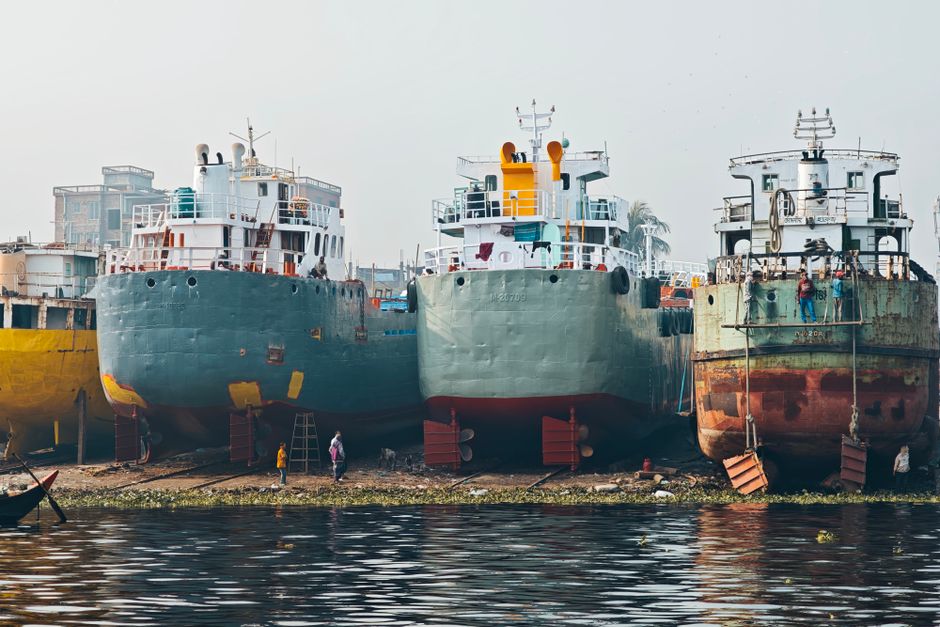
The Hidden Cost of a Dirty Hull
Every vessel afloat faces an invisible adversary that quietly erodes profitability mile after mile: marine biofouling. From microscopic slime layers to dense colonies of barnacles and tubeworms, biological growth on a ship's underwater hull creates hydrodynamic drag that forces main engines to work harder, burn more bunkers, and push operating costs steadily upward. According to research published by the IMO's GloFouling Partnerships Project, even a thin biofilm of just 0.5 mm can increase frictional resistance by 25%, translating directly into higher fuel consumption and elevated greenhouse gas emissions.
For fleet managers, chief engineers, and procurement officers navigating today's volatile bunker fuel markets, this is not a marginal concern. With VLSFO prices frequently exceeding $600 per metric tonne and the IMO's Carbon Intensity Indicator (CII) regulations tightening year on year, the financial and regulatory consequences of neglecting hull condition have never been more severe. The good news is that underwater hull cleaning and inspection technology has advanced dramatically, offering shipowners practical tools to reclaim lost efficiency without the massive expense and downtime of unscheduled drydocking.
How Biofouling Impacts Fuel Consumption and Emissions
The relationship between hull fouling and fuel burn is well documented in marine engineering literature. A vessel operating with heavy calcareous fouling can experience fuel penalty increases of 30% to 40% compared to a clean hull baseline. Even moderate slime fouling — the kind that develops within weeks in tropical waters — can impose a fuel penalty of 10% to 15%. For a Panamax bulk carrier consuming roughly 30 tonnes of fuel per day at service speed, a 12% fouling penalty means an additional 3.6 tonnes burned daily, adding approximately $2,160 per day at current VLSFO rates.
The CII and EEXI Compliance Connection
Since 1 January 2023, the IMO's CII framework under MARPOL Annex VI requires vessels to demonstrate year-on-year improvements in operational carbon intensity. A fouled hull directly degrades a ship's CII rating by increasing the fuel consumed per tonne-mile of cargo transported. Vessels receiving a D or E rating for three consecutive years face the prospect of corrective action plans, enhanced port state control scrutiny, and potential commercial disadvantages as charterers increasingly demand C-rated or better tonnage. Meanwhile, the Energy Efficiency Existing Ship Index (EEXI) sets a mandatory technical efficiency threshold. Hull fouling effectively raises attained EEXI values, narrowing the compliance margin that many older vessels already struggle to maintain.
Flag State and Class Society Expectations
Flag state administrations and classification societies such as DNV, Lloyd's Register, and Bureau Veritas now incorporate hull and propeller condition into their performance monitoring frameworks. Several class societies offer hull performance management notations that require regular underwater inspections and documented cleaning schedules. Vessels that participate in these voluntary programmes often benefit from more favourable insurance terms and reduced scrutiny during port state control inspections, creating a tangible commercial incentive beyond pure fuel savings.
Modern Underwater Hull Cleaning Technologies
The underwater hull cleaning sector has evolved far beyond the days of divers wielding manual scrapers. Today's solutions range from remotely operated vehicles (ROVs) equipped with brush cartridge systems to hull-crawling robots that combine simultaneous cleaning with real-time inspection. These technologies enable proactive maintenance without the need to remove a vessel from service.
ROV-Based Cleaning Systems
Remotely operated hull cleaning vehicles use magnetic or thruster-based adhesion to traverse the hull surface while rotating brush or disc systems remove fouling. Advanced units capture removed material through integrated filtration systems, addressing increasingly strict environmental regulations around discharge of biofouling waste in port waters. Leading ROV platforms can clean a VLCC hull in under 12 hours — a fraction of the time required for drydock blasting — while the vessel remains alongside or at anchor. Real-time video feeds allow marine superintendents and class surveyors to monitor progress and document hull condition simultaneously.
AI-Powered Inspection and Predictive Analytics
Perhaps the most transformative development in this space is the integration of artificial intelligence with underwater inspection. High-definition cameras mounted on cleaning ROVs now capture thousands of geo-referenced images during every operation. Machine learning algorithms analyse these images to map fouling distribution patterns, identify coating damage, detect early signs of corrosion, and assess the condition of anodes, sea chests, and appendages. This data feeds into predictive analytics platforms that forecast fouling progression based on vessel trading patterns, water temperature, route salinity profiles, and coating age. Fleet managers can use these insights to schedule proactive cleaning interventions at the optimal moment — early enough to prevent significant drag penalties but late enough to avoid unnecessary expenditure.
Quantifying the Financial Benefits
The economic case for regular in-water hull cleaning is compelling across every vessel segment. Independent studies and fleet performance data consistently demonstrate returns on investment that make hull maintenance one of the most cost-effective operational interventions available.
A 2023 study by the International Council on Clean Transportation (ICCT) estimated that proactive hull cleaning could save the global fleet between $30 billion and $60 billion annually in fuel costs while reducing CO2 emissions by 80 to 160 million tonnes per year. At the individual vessel level, a typical Suezmax tanker spending $15,000 to $25,000 on an in-water hull cleaning can recover that investment within days through reduced fuel consumption.
Consider the following scenario for a container feeder vessel operating at 18 knots and consuming 45 tonnes of fuel per day. With moderate biofouling imposing a 12% fuel penalty, the vessel burns an additional 5.4 tonnes daily. Over a 30-day trading period, the excess fuel cost reaches approximately $97,200 at $600 per tonne. A proactive hull clean costing $12,000 to $18,000 eliminates this waste almost entirely, delivering a net saving of roughly $80,000 per month.
Extending Drydock Intervals
Beyond direct fuel savings, effective in-water maintenance programmes allow shipowners to extend intervals between scheduled drydockings. Under SOLAS and classification society rules, most cargo vessels must enter drydock at least twice within every five-year special survey cycle, with the interval between dockings typically not exceeding 36 months. However, class societies including DNV and Lloyd's Register now offer extended drydock interval schemes — sometimes up to 7.5 years — for vessels that demonstrate consistent hull condition through documented in-water inspection programmes. Given that a single drydocking for a mid-size cargo vessel costs between $500,000 and $2 million depending on scope, extending the interval by even 12 to 18 months represents substantial capital expenditure deferral.
Avoiding Emergency Drydockings
Unplanned drydock entries are among the most expensive disruptions a shipowner can face. Beyond the direct repair and docking fees, off-hire costs for a vessel earning $20,000 to $40,000 per day accumulate rapidly during the two to four weeks a typical emergency drydocking requires. Regular underwater inspections catch coating failures, pitting corrosion, and mechanical damage to rudders, propellers, and stern tube seals before they escalate into classification deficiencies or port state control detentions. This preventive approach transforms hull maintenance from a reactive emergency cost into a planned, budgetable operational expense.
Environmental and Regulatory Drivers
Environmental regulations are accelerating the adoption of hull cleaning technology from multiple directions. The IMO's revised Biofouling Guidelines, updated in 2023, strengthen recommendations for biofouling management plans and record books, bringing hull maintenance into sharper regulatory focus. Several coastal states, most notably New Zealand and Australia, have already enacted mandatory biofouling management requirements for arriving vessels, with California's Marine Invasive Species Act imposing similar obligations on the U.S. West Coast.
MARPOL Annex VI's greenhouse gas reduction ambitions — targeting a 40% reduction in carbon intensity by 2030 relative to 2008 levels — make hull efficiency a frontline compliance strategy. The EU Emissions Trading System (EU ETS), which began covering maritime transport in 2024, adds a direct financial cost to every excess tonne of CO2 emitted, further strengthening the business case for hull optimisation.
For vessels trading globally, maintaining documented proof of hull cleaning and inspection also reduces exposure during port state control inspections. PSC officers increasingly check biofouling management plans, and a well-maintained hull condition record demonstrates compliance with both MARPOL and the IMO's biofouling guidelines, reducing the risk of delays or detentions that disrupt commercial schedules.
Key Takeaways
- Fuel savings of 10–15% are achievable through timely in-water hull cleaning, with payback periods measured in days rather than months.
- CII and EEXI compliance is directly improved by maintaining optimal hull condition, protecting vessels from rating downgrades and commercial penalties.
- Drydock intervals can be extended by 12 to 36 months through class-approved in-water inspection programmes, deferring capital expenditure of $500,000 or more per docking.
- AI-powered inspection platforms enable predictive maintenance scheduling, moving hull care from reactive to proactive management.
- Environmental regulations including MARPOL Annex VI, the EU ETS, and national biofouling laws are making hull maintenance a compliance necessity, not merely an operational preference.
- Port state control readiness improves when vessels carry documented biofouling management plans supported by regular inspection records.
Partner with Experts Who Understand Your Hull
Effective underwater hull cleaning and inspection requires more than advanced technology — it demands experienced maritime partners who understand vessel operations, classification requirements, and the regulatory landscape across global trading routes. Since 1989, Seaway Ship Services has delivered comprehensive underwater services alongside ship repair, provisions, stores, bunkers, fire fighting equipment, and maritime calibration solutions to vessels calling at Istanbul and ports worldwide. Whether you need a single hull cleaning operation, a fleet-wide biofouling management programme, or expert guidance on extending drydock intervals, our technical team is ready to support your operational and compliance goals. Contact Seaway Ship Services today to discuss how our underwater services can reduce your fuel costs and keep your fleet trading efficiently.