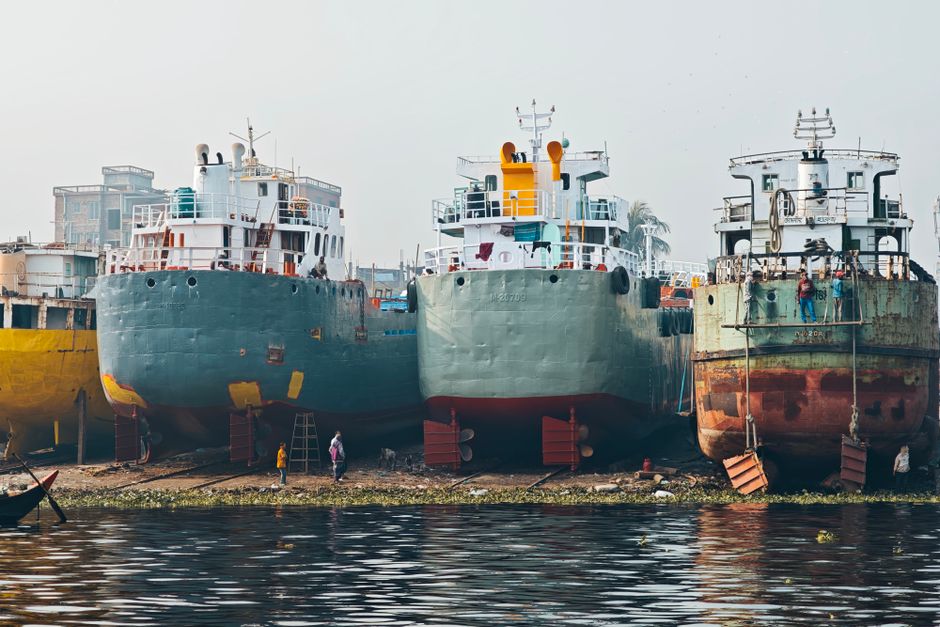
Why Drydock Planning Matters More Than Ever in 2026
Drydocking a vessel has always been one of the most capital-intensive events in a ship's operational lifecycle, but in 2026, the stakes are considerably higher. According to Drewry Maritime Research, the average drydock cost for a Panamax bulker has risen by approximately 18% since 2023, driven by yard capacity constraints in Asia and an unprecedented wave of vessels requiring Energy Efficiency Existing Ship Index (EEXI) retrofits. Meanwhile, the IMO's Carbon Intensity Indicator (CII) framework — now in its third year of enforcement — means that every day spent in drydock must yield measurable efficiency gains that directly affect a vessel's annual rating.
For fleet managers, chief engineers, and procurement officers, the margin for error during drydocking has narrowed dramatically. A poorly planned drydock can result in costly overruns, extended off-hire periods, and, in worst-case scenarios, port state control deficiencies that follow a vessel across jurisdictions. This guide consolidates the most current best practices for drydock preparation, execution, and follow-up in 2026, drawing on regulatory updates, yard market intelligence, and real-world operational insights from the maritime services sector.
Pre-Drydock Planning: The 12-Month Runway
Successful drydocking begins long before a vessel arrives at the yard. Industry consensus among leading class societies such as Lloyd's Register, DNV, and Bureau Veritas points to a minimum 12-month planning horizon for intermediate surveys and a full 18 months for special surveys. Yet a 2025 survey by the International Association of Classification Societies (IACS) revealed that nearly 30% of operators still begin substantive planning fewer than six months out, leading to avoidable cost escalation and scope creep.
Building the Specification Document
The drydock specification — sometimes called the repair list or work scope — is the single most important document in the entire process. It should be a living document that begins accumulating items from the vessel's planned maintenance system (PMS), class survey requirements, flag state mandates, and condition-based monitoring data. Best practice in 2026 calls for a structured, itemised specification that clearly separates the following categories:
- Class and statutory items: These are non-negotiable requirements driven by your class society survey schedule and SOLAS or MARPOL compliance deadlines. Examples include hull thickness gauging, tailshaft withdrawal at the second or third special survey, and verification of ballast water management systems under the BWM Convention.
- Owner's maintenance items: Planned maintenance that can only be performed in drydock, such as propeller polishing, rudder bearing clearance checks, sea valve overhauls, and anchor chain re-ranging and calibration.
- Performance and efficiency upgrades: CII-driven retrofits like hull coating upgrades to silicone-based fouling-release systems, propeller boss cap fins, Mewis ducts, or shaft generator installations. Given that a vessel rated D or E on the CII scale for three consecutive years may face operational restrictions, these upgrades have shifted from optional to essential.
- Stores, provisions, and equipment renewal: Drydock periods offer a natural window for embarking large-volume stores, replacing fire fighting equipment, upgrading radio and navigation equipment, and replenishing ropes and mooring gear — items that are difficult to handle during normal port calls.
Yard Selection and Slot Booking
The global drydock yard market in 2026 is tight. Chinese yards — which handle roughly 40% of the world's drydocking volume — are experiencing significant backlogs due to the newbuilding boom in LNG carriers and dual-fuel container vessels. Consequently, operators who delay yard booking often face premium pricing or inconvenient scheduling that clashes with charter party commitments. Best practices for yard selection include:
- Requesting quotations from at least three yards across different regions to benchmark pricing and availability.
- Evaluating each yard's track record with your vessel type and flag state requirements. Some flag states require that certain statutory works are performed under the direct supervision of their appointed surveyors, which limits yard options geographically.
- Confirming that the yard holds relevant certifications and can accommodate specialised work such as underwater hull cleaning to biofouling standards under the IMO's 2023 Biofouling Guidelines revision.
- Negotiating contract terms that include clear provisions for penalty clauses on delays, change-order pricing mechanisms, and dispute resolution protocols.
Executing the Drydock: On-Site Best Practices
Once the vessel enters the yard, the operational tempo shifts from planning to execution. The superintendent or project manager assigned to oversee the drydock is arguably the most critical appointment in the entire process. Leading operators in 2026 typically assign a dedicated superintendent for every drydock exceeding 15 days, supported by remote monitoring from the technical management office.
Daily progress meetings between the owner's team, the yard project manager, and attending class surveyors are essential. These meetings should follow a standardised agenda: review of completed work against the specification, identification of any additional findings (especially from hull and tank inspections), updated scheduling of critical-path items, and a rolling cost tracker. Failure to maintain a disciplined meeting cadence is one of the most common reasons for drydock overruns.
Hull and Underwater Work
Hull condition remains the single largest variable in drydock duration and cost. A vessel arriving with heavy marine growth or pitting corrosion will require extensive surface preparation — grit blasting to SA 2.5 standard — before any coating can be applied. In 2026, the coating technology landscape has shifted noticeably. Silicone-based fouling-release coatings now represent approximately 25% of the global antifouling market, up from around 12% in 2021, according to data from coatings manufacturers Jotun and Hempel. These coatings can reduce hull friction by 5–8% compared to conventional biocide-based paints, translating directly into fuel savings and improved CII ratings.
Underwater services conducted during drydock — including propeller removal and repair, stern tube seal replacement, sea chest inspections, and sonar transducer maintenance — should be sequenced carefully against hull coating schedules to avoid contamination of freshly coated surfaces. Operators should also use the drydock period to calibrate or replace impressed current cathodic protection (ICCP) systems and sacrificial anodes, as corrosion protection directly affects hull longevity between survey intervals.
Machinery and Safety Equipment Overhauls
The drydock provides the only practical opportunity to address certain machinery items that cannot be serviced while the vessel is afloat. Main engine crankcase inspections, turbocharger overhauls, and boiler surveys often coincide with special survey requirements. In 2026, particular attention should be given to the following areas:
- Ballast water management systems (BWMS): Vessels that installed first-generation BWMS during the initial compliance wave (2017–2022) are now encountering component degradation. UV lamp assemblies, electrochlorination cells, and filter elements should be inspected and replaced as needed during drydock to avoid non-compliance at the next port state control inspection.
- Fire fighting equipment: SOLAS Chapter II-2 requirements mandate periodic inspection and testing of fixed fire-extinguishing systems, fire doors, and detection systems. Drydock is the ideal time for full servicing of CO₂ flooding systems, foam concentrate replacement, and hydrostatic testing of portable extinguishers.
- Radio and navigation equipment: With the IMO's e-navigation strategy progressing, 2026 is seeing increased port state control attention on ECDIS software updates, AIS transceiver performance, and GMDSS battery capacity. Ensuring all radio and navigation equipment is current before departing the yard prevents costly detentions.
Cost Control and Budgeting Strategies
Drydock budgets have a well-documented tendency to grow. Industry data suggests that the average drydock project experiences a 15–25% cost overrun relative to the initial budget, with the primary drivers being additional findings during hull and tank inspections, scope additions requested by class surveyors, and yard-side inefficiencies. Effective cost control in 2026 requires a multi-layered approach.
First, build contingency into the budget from the outset. A minimum contingency of 15% on top of the base specification cost is considered standard practice by most ship management companies. Second, pre-purchase long-lead-time items — including specialty coatings, spare propeller blades, tailshaft seals, and any class-mandated replacement parts — well in advance. Supply chain volatility remains a factor in 2026, and yard procurement markups can be substantial. Third, consider bundling service requirements through a single maritime services provider that can coordinate the supply of stores, spare parts, fire safety equipment, and bunkers as a consolidated package, reducing logistics friction and often securing volume discounts.
Fuel economics also factor into drydock cost planning. Depending on the yard's location, bunkering immediately before or after drydock at a cost-effective port can offset some of the drydock expenditure. Monitoring bunker prices at nearby ports and coordinating with fuel suppliers is a worthwhile exercise that procurement officers frequently overlook during the drydock planning phase.
Post-Drydock: Trials, Documentation, and Compliance
The drydock does not end when the vessel refloats. Sea trials — or at minimum, dock trials — are required to verify the performance of all machinery, steering gear, and safety systems that were serviced or modified during the yard period. Class surveyors will typically attend the final day of drydock and the subsequent trials to close out survey items and endorse condition of class.
Documentation discipline is paramount. Every work item completed during the drydock should be supported by a corresponding job completion report, test certificate, or survey confirmation. These documents form the vessel's compliance dossier and are the first things a port state control inspector will request if any deficiency is suspected. In 2026, many leading operators are digitising their drydock documentation into centralised fleet management platforms, enabling instant retrieval of certificates, thickness measurement reports, and coating application records.
Particular attention should be paid to ensuring that all certificates — Safety Equipment Certificate, Safety Construction Certificate, International Load Line Certificate, IOPP Certificate, and any relevant MARPOL annexe certificates — are properly endorsed and their validity dates confirmed before the vessel resumes trading. An expired or improperly endorsed certificate can result in detention at the next port of call, negating the entire investment of the drydock.
Key Takeaways for Drydock Success in 2026
- Start early: A 12–18 month planning runway is no longer aspirational — it is the minimum needed to secure competitive yard slots and avoid premium pricing in the tight 2026 market.
- Treat the specification as a strategic document: Integrate class requirements, CII improvement targets, and operational maintenance into a single, prioritised work scope that is reviewed monthly in the lead-up to drydock.
- Invest in coatings and efficiency retrofits: With the CII regime now fully operational, hull coating upgrades and hydrodynamic improvements deliver returns that extend well beyond the drydock period.
- Maintain cost discipline: Budget a minimum 15% contingency, pre-purchase critical spares, and consolidate procurement through experienced maritime service partners to control spend.
- Sequence work intelligently: Coordinate hull, machinery, and safety equipment work streams to avoid critical-path conflicts and minimise total yard time.
- Close out documentation rigorously: Ensure every completed item has supporting certification, and verify all statutory certificates are endorsed before departure.
- Leverage the drydock window for logistics: Use the yard period to embark large-volume provisions, stores, safety equipment, and spare parts that are impractical to handle during routine port calls.
Partner With Experts Who Understand Every Phase of the Drydock
Drydocking is a complex, high-stakes operation that touches virtually every aspect of vessel management — from hull coatings and machinery overhauls to fire safety compliance and stores replenishment. Having a trusted maritime services partner who can coordinate across all of these requirements dramatically reduces the logistical burden on your technical and procurement teams.
Since 1989, Seaway Ship Services has supported vessels through every phase of the drydock process, providing comprehensive ship supply, fire fighting equipment servicing, ropes and mooring supply, radio and navigation equipment, maritime calibration and testing, and worldwide export of spare parts and stores to yards across the globe. Whether your vessel is drydocking in Istanbul, the Far East, or anywhere in between, our experienced team can help you plan, provision, and execute a drydock that comes in on time and on budget. Contact Seaway Ship Services today to discuss your upcoming drydock requirements and discover how our integrated maritime services can support your fleet's operational and compliance goals.