What Is Digital Twin Technology in the Maritime Industry?
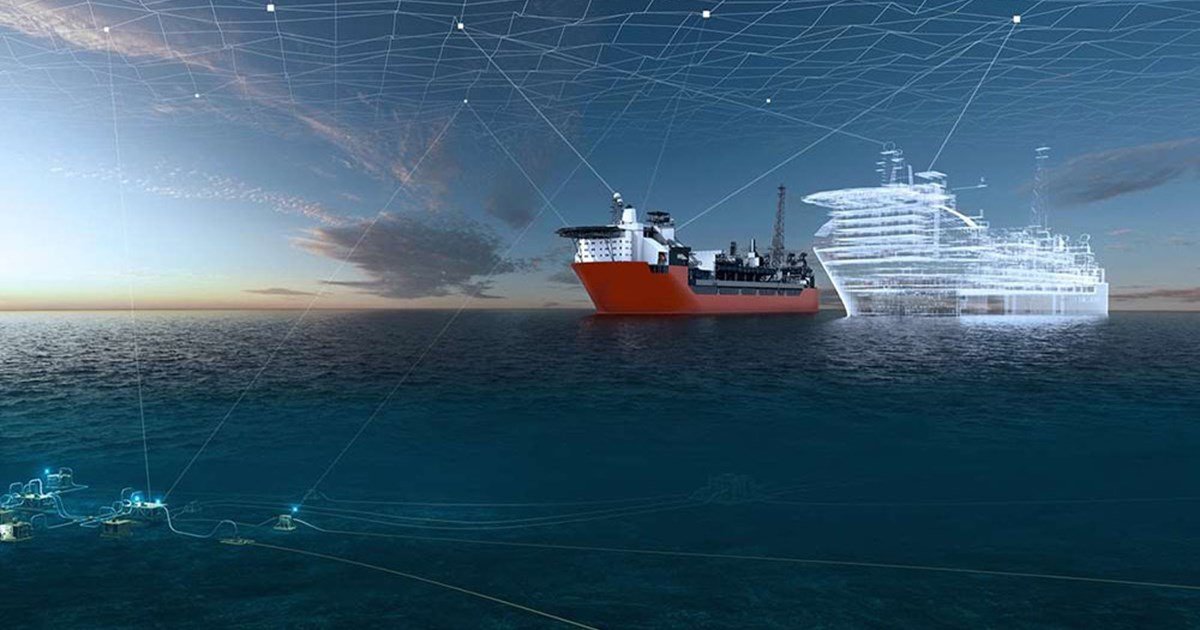
Digital twin technology has rapidly evolved from a niche engineering concept into one of the most transformative innovations in modern shipping. At its core, a digital twin is a real-time virtual replica of a physical asset — in this case, a vessel, its machinery, or even an entire port — that continuously receives data from onboard sensors and external sources. This living model allows fleet operators, chief engineers, and shore-based teams to monitor, simulate, and optimize vessel performance without ever physically inspecting the equipment in question.
The concept originated in aerospace and manufacturing, but the maritime sector has embraced it with growing urgency. According to a 2025 report by Lloyd's Register and the Safetytech Accelerator, over 35% of newbuild contracts now include digital twin specifications in their design phase. The IMO has also recognized the potential of digital twins within its broader push toward maritime digitalization, referencing virtual modeling frameworks in its discussions on the Maritime Autonomous Surface Ships (MASS) regulatory scoping exercise.
For maritime professionals — whether you are a master overseeing bridge operations, a procurement officer managing stores and provisions, or a fleet manager coordinating drydock schedules — understanding digital twin technology is no longer optional. It is becoming a competitive necessity.
How Digital Twins Work on Modern Vessels
Sensor Networks and Data Integration
A maritime digital twin depends on a dense network of IoT sensors installed throughout the vessel. These sensors capture thousands of data points every second: engine temperature and vibration, hull stress, fuel consumption rates, ballast water levels, exhaust emissions, and navigational parameters. This raw data is transmitted — either in real time via satellite or in batches when connectivity allows — to a cloud-based platform where the digital twin model resides.
The model then integrates this operational data with historical maintenance records, class society survey reports, original equipment manufacturer (OEM) specifications, and environmental data such as sea state, current patterns, and weather forecasts. The result is a dynamic, continuously updated representation of the vessel's actual condition, not merely the condition assumed from the last physical inspection.
Simulation and Predictive Analytics
Where digital twins truly distinguish themselves is in their ability to run simulations. Fleet managers can model what-if scenarios — for example, how an ageing main engine turbocharger will perform under tropical heat conditions over the next 6,000 running hours, or whether a hull fouling rate suggests an earlier-than-planned drydock visit. DNV reported in 2025 that early adopters using hull performance digital twins reduced unplanned off-hire days by up to 20%, translating to significant cost savings on a per-vessel basis.
This predictive capability is especially valuable for scheduling maintenance around port state control inspections and flag state audits. Rather than relying solely on calendar-based or running-hour-based maintenance intervals, operators can shift to condition-based maintenance — repairing or replacing components precisely when the data indicates it is needed.
Key Applications Across Maritime Operations
Predictive Maintenance and Ship Repair Planning
One of the most immediate and cost-effective applications of digital twins is in predictive maintenance. Traditional maintenance regimes often result in two costly outcomes: either equipment fails unexpectedly between scheduled services, or components are replaced prematurely, wasting parts and labour. Digital twins eliminate much of this guesswork.
Consider a scenario where vibration sensors on a vessel's auxiliary engine detect a gradual increase in harmonic frequency that the digital twin model correlates with bearing wear. The system alerts the technical superintendent weeks before failure would occur, allowing the company to source the correct spare parts, coordinate with a ship repair provider at the next port of call, and avoid an expensive emergency repair or deviation. This is precisely the kind of integrated planning that reduces vessel downtime and keeps SOLAS safety equipment fully operational.
Digital twins also enhance drydock planning. By continuously monitoring hull condition, propeller performance, and underwater appendages, the twin can recommend optimal drydock timing — potentially extending intervals where regulations and class society rules allow, or flagging issues that demand earlier attention. This data-driven approach to underwater hull management complements traditional underwater services such as hull cleaning and propeller polishing.
Fuel Efficiency and Environmental Compliance
With the IMO's Carbon Intensity Indicator (CII) and Energy Efficiency Existing Ship Index (EEXI) regulations now fully in force, fuel efficiency is not merely an operational preference — it is a regulatory mandate. Digital twins allow operators to model the precise relationship between speed, trim, weather routing, hull condition, and fuel consumption in real time.
A 2025 study published by BIMCO estimated that vessels using digital twin-enabled voyage optimization consumed 8–12% less bunker fuel on average compared to conventionally managed sister ships on similar routes. For a Panamax bulk carrier consuming approximately 30 metric tonnes of fuel oil per day, even a 10% reduction represents enormous savings — both financially and in terms of MARPOL Annex VI compliance.
Digital twins also support accurate emissions reporting, which is increasingly scrutinized by port state control authorities under regional regulations such as the EU Emissions Trading System (EU ETS) that expanded to cover maritime shipping in 2024. Having a verified, sensor-backed digital model of fuel consumption and emissions makes audits and reporting far more straightforward.
Digital Twins in Port Operations and Supply Chain Management
The value of digital twin technology extends beyond the vessel itself. Major ports including Singapore, Rotterdam, and Shanghai have deployed port-level digital twins that model vessel traffic, berth allocation, crane operations, and cargo flows in real time. These port twins interact with vessel twins to optimize arrival times, reduce waiting at anchorage, and streamline cargo operations.
For ship supply and logistics professionals, this integration has practical implications. When a port digital twin can predict a vessel's exact berth time hours or days in advance — rather than relying on estimated times of arrival that frequently shift — it becomes possible to coordinate the delivery of provisions, stores, spare parts, and safety equipment with far greater precision. Late or missed deliveries due to schedule changes are a persistent pain point in maritime logistics. Twin-to-twin data sharing promises to significantly reduce these disruptions.
The procurement of fire fighting equipment, ropes and mooring lines, radio and navigation equipment, and other critical supplies can be better timed when shore-based teams have visibility into the vessel's actual schedule and operational needs. Digital twins that track the usage and condition of consumables — such as mooring rope wear or fire extinguisher service intervals — can even trigger automatic reorder notifications to procurement officers.
Challenges and Barriers to Adoption
Despite the clear benefits, digital twin adoption in maritime faces several real-world hurdles. First, the upfront investment is significant. Retrofitting an existing vessel with the sensor infrastructure needed to feed a comprehensive digital twin can cost between $150,000 and $500,000 depending on vessel size and complexity, according to estimates from Wärtsilä's 2025 digital solutions division. For newbuilds, the cost is lower, but the technology must still be specified, installed, and commissioned correctly.
Second, data quality and standardization remain persistent challenges. Vessels often operate equipment from multiple OEMs, each with proprietary data formats and communication protocols. The lack of a universally adopted maritime data standard — despite progress from initiatives like the Maritime Data Space and ISO 19848 — means that integrating sensor data into a unified digital twin model requires significant custom engineering.
Third, cybersecurity is a genuine concern. A digital twin that receives and transmits operational data continuously creates a larger attack surface. The IMO's MSC-FAL.1/Circ.3 guidelines on maritime cyber risk management require that cyber risks be addressed in a vessel's Safety Management System, and any digital twin deployment must be designed with robust encryption, access controls, and network segmentation from the outset.
Finally, there is the human factor. Crew members, superintendents, and shore-based engineers need training to interpret digital twin outputs and trust the recommendations. A digital twin that flags an engine anomaly is only useful if the chief engineer understands the alert and the shore team responds with the correct parts and service coordination.
The Future: Autonomous Shipping and Regulatory Evolution
Looking ahead, digital twins are expected to become foundational infrastructure for maritime autonomous surface ships. The IMO's MASS Code, anticipated to enter into force in the coming years, will likely require some form of continuous remote monitoring for autonomous or semi-autonomous vessels — a function that digital twins are uniquely positioned to fulfill.
Classification societies including DNV, Lloyd's Register, Bureau Veritas, and ClassNK have all published digital twin frameworks or notation guidelines. DNV's Cyber Secure and Digital Twin Verification notations, for example, provide a structured pathway for operators seeking third-party validation of their digital twin systems. These class society endorsements are accelerating institutional confidence in the technology.
The convergence of digital twins with artificial intelligence and machine learning is also opening new possibilities. AI-enhanced twins can identify failure patterns that human analysts might miss, optimize voyage planning across entire fleets simultaneously, and even support automated regulatory reporting for MARPOL, SOLAS, and CII compliance. Research from the University of Strathclyde's Maritime Safety Research Centre suggests that AI-integrated digital twins could reduce major machinery failures by up to 30% by 2030.
Key Takeaways
- Digital twins are virtual replicas of physical vessels that use real-time sensor data to monitor condition, predict failures, and optimize performance.
- Predictive maintenance powered by digital twins can reduce unplanned off-hire by up to 20% and eliminate premature or missed component replacements.
- Fuel savings of 8–12% are achievable through twin-enabled voyage optimization, directly supporting IMO CII and MARPOL Annex VI compliance.
- Port-level digital twins improve supply chain coordination, enabling more precise delivery of provisions, stores, spare parts, and safety equipment.
- Barriers remain — including retrofit costs, data standardization gaps, cybersecurity risks, and crew training requirements — but industry momentum is strong.
- Class societies and the IMO are actively developing frameworks that will likely make digital twin capability a regulatory expectation, not just a competitive advantage.
Partner with Seaway Ship Services for a Smarter Fleet
As the maritime industry embraces digital transformation, the fundamentals remain unchanged: vessels still need reliable supplies, expert repair services, properly calibrated safety equipment, and a trusted partner who understands global port operations. Seaway Ship Services has been delivering exactly that since 1989 — from ship supply and bunker coordination to fire fighting equipment, underwater services, and maritime calibration and testing across ports worldwide. Whether your fleet is adopting digital twin technology or optimizing traditional operations, our team is ready to support your vessels wherever they trade. To discuss your requirements or learn more about our comprehensive maritime services, contact Seaway Ship Services today.
