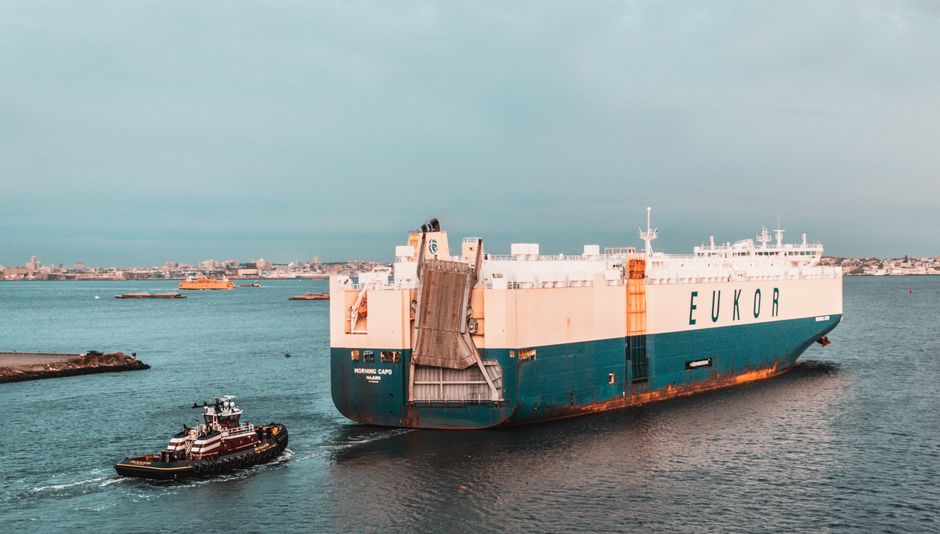
The Maritime Industry at a Crossroads
The global shipping industry, responsible for transporting more than 80% of world trade by volume, is undergoing the most significant transformation in its history. Driven by the International Maritime Organization's (IMO) ambitious decarbonisation targets — a net-zero greenhouse gas emissions goal by or around 2050, with a 40% reduction in carbon intensity by 2030 compared to 2008 levels — shipowners, operators, flag states, class societies, and port authorities are being forced to rethink every aspect of vessel design, propulsion, and operations.
For maritime professionals — whether masters, chief engineers, fleet managers, or port agents — understanding these emerging technologies is no longer optional. It is becoming a core competency required to remain competitive and compliant. From ammonia-fuelled engines to AI-driven voyage optimisation, here is a comprehensive overview of the innovations that will reshape maritime transport by 2030.
Alternative Fuels and Zero-Emission Propulsion
The single largest technological challenge confronting shipping is replacing heavy fuel oil (HFO) and marine gas oil (MGO) — the traditional bunker fuels that have powered global trade for over a century. Under the IMO's revised strategy and MARPOL Annex VI regulations, the industry now faces binding milestones that make alternative fuel adoption not just commercially attractive but legally necessary.
Green Ammonia and Methanol
Among the most promising zero-emission fuels are green ammonia and green methanol, both of which can be produced using renewable electricity and therefore carry a near-zero carbon footprint on a well-to-wake basis. Major engine manufacturers MAN Energy Solutions and Wärtsilä have already delivered commercially operational methanol dual-fuel engines, and the order book for methanol-ready vessels is growing rapidly. Maersk, for example, has ordered more than 25 methanol-fuelled container ships, signalling strong market confidence.
Ammonia carries higher energy density than methanol and produces zero CO₂ when combusted, but presents significant challenges: it is toxic to humans and marine life, corrosive to certain materials, and requires robust safety management systems that comply with both SOLAS and upcoming IGF Code amendments specifically addressing ammonia as a fuel. Port state control inspectors will increasingly scrutinise ammonia bunkering operations as the fuel enters wider circulation over the next five years. For ship supply companies, this creates demand for specialised safety equipment, personal protective gear, and crew training materials.
Hydrogen and LNG as a Transition Fuel
Liquid hydrogen (LH₂) remains a longer-horizon solution due to its extreme cryogenic storage requirements (minus 253°C), but significant investment is flowing into port infrastructure development in Japan, South Korea, and Northern Europe. Meanwhile, liquefied natural gas (LNG) continues to serve as a critical bridge fuel, reducing SOx emissions by up to 99% and NOx by approximately 85% compared to HFO — a meaningful contribution to MARPOL compliance even if it does not fully solve the CO₂ challenge. The global LNG bunkering network now encompasses over 200 ports, and this infrastructure maturity gives LNG a practical advantage over emerging alternatives well into the 2030s.
Wind-Assisted Propulsion and Energy-Saving Technologies
Often overlooked in favour of headline-grabbing fuel technologies, wind-assisted propulsion systems (WAPS) represent one of the most commercially mature and cost-effective decarbonisation tools available to shipowners today. Unlike alternative fuels, which require new engines and fuel supply chains, wind-assist technologies can be retrofitted to existing vessels with relatively short payback periods.
Rotor Sails, Wing Sails, and Kite Systems
The Flettner rotor sail — a spinning vertical cylinder that uses the Magnus effect to generate thrust — has been fitted on a growing number of bulk carriers and tankers since Norsepower's breakthrough commercial installations in 2018. Fleet data now shows consistent fuel savings of between 5% and 10% per voyage on suitable routes, with some vessels reporting higher gains in favourable wind corridors. For a Capesize bulker consuming 50 tonnes of bunker fuel per day at sea, a 7% saving translates to approximately 1,277 tonnes of bunker saved per year — a substantial operational cost reduction at current fuel prices.
Hard sail and soft sail wing systems, rigid DynaRig configurations, and high-altitude kite systems (such as those under development by Airseas and SkySails) are all at varying stages of commercial deployment. The IMO's Carbon Intensity Indicator (CII) rating scheme, which grades vessels on an A-to-E scale from 2023 onwards, is creating a powerful commercial incentive for these retrofits: vessels rated D or E face restrictions on continued operation and are barred from operating under certain port state control regimes.
Air Lubrication and Hull Coatings
Below the waterline, air lubrication systems — which inject a carpet of microscopic bubbles beneath the hull to reduce frictional resistance — are achieving proven fuel savings of 5–8% in commercial service. Silverstream Technologies and Mitsubishi's MALS system are leading the market, with retrofit installations now numbering in the hundreds across container ships and cruise vessels. Complementing this technology are next-generation anti-fouling hull coatings incorporating silicone hydrogels and biocide-free formulations that maintain a slippery surface across the full drydock cycle, reducing speed loss from fouling and the associated increase in fuel consumption and emissions. For ship repair facilities and underwater services providers, these technologies are generating significant new revenue streams in drydock scheduling, application, and inspection services.
Digital Transformation: AI, Autonomous Vessels, and Smart Ports
The digitalisation of shipping is accelerating at a pace that would have been unthinkable just a decade ago. From the bridge to the engine room, and from the operations centre to the port terminal, artificial intelligence, the Internet of Things (IoT), and big data analytics are fundamentally altering how vessels are operated and managed.
AI-Powered Voyage Optimisation and Predictive Maintenance
AI-driven weather routing and voyage optimisation platforms — provided by companies such as Nauticus Robotics, Wartsila Voyage, and ABB Marine — can reduce fuel consumption by a further 5–15% by dynamically adjusting vessel speed, heading, and trim in real time based on weather data, current forecasts, and port arrival windows. For fleet managers and procurement officers, these platforms also generate the granular voyage data required for CII calculations, EU Emissions Trading System (EU ETS) reporting from 2024 onwards, and Carbon Intensity Reporting under the IMO Data Collection System (DCS).
Predictive maintenance, powered by sensor data and machine learning algorithms, is transforming how chief engineers and technical superintendents manage critical equipment. Rather than relying on fixed maintenance intervals — which can result in either premature drydock visits or costly unplanned breakdowns — predictive systems monitor the condition of main engines, auxiliary machinery, and hull structures in real time, alerting crews to developing faults weeks or months before failure. This directly reduces unplanned port calls, emergency repairs, and the associated costs of ship chandlery on a crisis basis rather than planned procurement.
Autonomous and Remote-Controlled Vessels
While fully autonomous ocean-going vessels operating without any crew remain beyond the 2030 horizon for most vessel types, the intermediate technology of remote-controlled and highly automated vessels is advancing rapidly. Kongsberg Maritime's Yara Birkeland, an electric autonomous container feeder operating on Norwegian coastal routes, provided a landmark proof of concept. Rolls-Royce and several Japanese shipbuilding consortia are developing systems for remote bridge operations in confined waters, with IMO's Maritime Autonomous Surface Ships (MASS) regulatory framework currently in development under the Maritime Safety Committee. The MSC is expected to adopt a new goal-based MASS Code by 2025, paving the way for broader deployment. For port agents and port state control authorities, MASS operations will introduce entirely new inspection protocols and documentation requirements.
Regulatory Landscape: IMO 2030 and Beyond
No discussion of maritime innovation is complete without examining the regulatory framework shaping investment decisions across the industry. The IMO's 2023 Revised GHG Strategy introduced binding intensity and absolute reduction targets for the first time, replacing the previous aspirational language with enforceable milestones. Critically, the IMO is developing a global economic measure — effectively a carbon pricing mechanism — expected to be adopted by 2025 and enter into force by 2027, which would place a direct financial cost on carbon emissions from international shipping for the first time in history.
Concurrently, the EU Emissions Trading System now covers 50% of emissions from voyages entering or departing EU ports and 100% of emissions from voyages between EU ports, applying to all vessels above 5,000 GT. From 2025, the EU ETS coverage expanded to 70%, and from 2026 it reaches 100% — a significant cost that fleet managers and charterers are now factoring into voyage calculations and charter party negotiations. Class societies such as DNV, Lloyd's Register, and Bureau Veritas are developing new notation systems and certification frameworks to verify compliance with these emerging fuel and emissions standards, adding a new layer of documentation requirements during drydock surveys and port state control inspections.
Emerging Technologies Reshaping Ship Supply and Services
The technology revolution in maritime transport is not confined to propulsion and navigation. The shore-side services that keep vessels operational — ship supply, ship repair, underwater services, fire fighting equipment certification, and radio and navigation equipment calibration — are themselves being transformed by digital tools and new materials.
Additive manufacturing (3D printing) is beginning to transform spare parts logistics. Rather than maintaining vast inventories of slow-moving components in port warehouses, some shipping companies and ship chandlers are now working with digital parts catalogues that allow components to be printed on demand at the nearest equipped facility, reducing both inventory carrying costs and vessel downtime. Autonomous underwater vehicles (AUVs) equipped with high-resolution sonar and visual inspection cameras are enabling hull inspections and minor underwater repairs without drydocking — a capability with significant implications for vessel scheduling, maintenance cost management, and compliance with class society inspection requirements. Digital twin technology, which creates a dynamic virtual replica of a vessel and its systems updated continuously with sensor data, is enabling more precise maintenance planning, drydock specification development, and equipment procurement decisions. For ship supply professionals, this creates an opportunity to provide data-integrated services — linking procurement directly to the vessel's actual consumption and condition data rather than relying on fixed periodic orders.
Key Takeaways
- Alternative fuels are moving fast: Methanol and LNG are commercially available now; ammonia and hydrogen are approaching viability by 2030. Bunkering infrastructure and crew training are critical near-term requirements.
- Wind-assist and efficiency technologies offer immediate ROI: Rotor sails, air lubrication, and advanced hull coatings are commercially proven, CII-compliant, and available for retrofit today.
- AI and digitalisation are reshaping operations: Voyage optimisation, predictive maintenance, and digital twins are reducing costs and improving regulatory reporting accuracy across all vessel types.
- Autonomous vessels are coming — but gradually: The MASS Code framework will enable remote-controlled and automated systems in specific trades by 2030, demanding new skills from crews and new inspection frameworks from port state control.
- Regulation is the forcing function: CII ratings, EU ETS costs, and the incoming IMO carbon pricing mechanism are converting decarbonisation from a CSR initiative into a core commercial imperative.
- Shore-side services are evolving: 3D printing, AUV inspection, and data-integrated supply chains are creating new service models for ship chandlers, repair yards, and maritime service providers.
For maritime professionals, the period between now and 2030 represents both the most challenging regulatory environment in modern shipping history and one of the greatest opportunities for competitive differentiation. Companies and individuals that invest in understanding these technologies — and building the relationships and capabilities to support them — will be best positioned to thrive in the zero-emission era of maritime transport.
As the maritime industry navigates this unprecedented period of technological change, having a trusted, experienced partner for ship supply, repair, underwater services, and equipment support is more important than ever. With more than 35 years of operational expertise at Turkish ports, the Bosphorus Strait, and Greek shipyards, Seaway Ship Services is ready to support your vessel's evolving needs — from conventional provisions and stores to fire fighting equipment, radio and navigation calibration, and drydock coordination. To discuss how we can support your fleet's transition to the technologies of tomorrow, contact Seaway Ship Services today.
