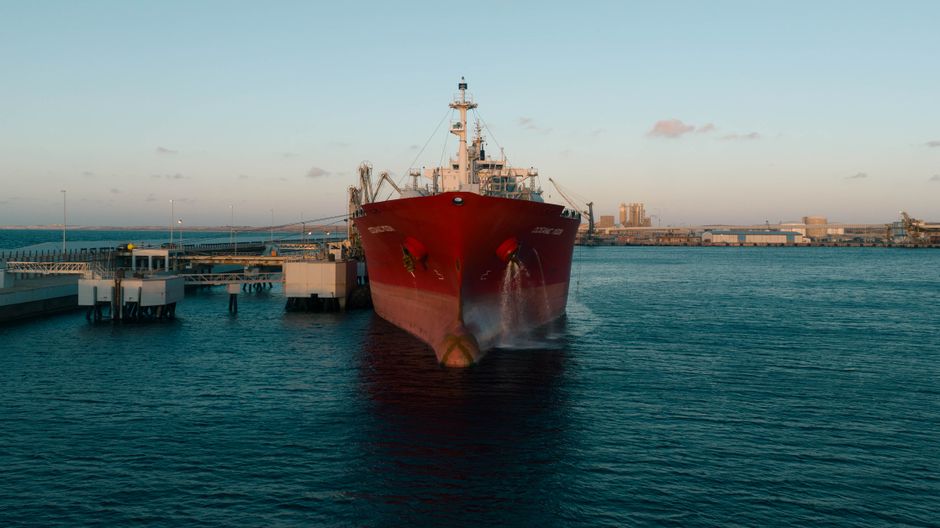
Why Alternative Marine Fuels Are No Longer Optional
The global shipping industry is facing a regulatory and commercial reckoning unlike anything in its modern history. The International Maritime Organization's (IMO) 2023 Revised GHG Strategy has set binding targets that make decarbonisation a legal obligation rather than a voluntary aspiration: a net-zero greenhouse gas target by or around 2050, a 20% absolute emissions reduction by 2030, and a 70% reduction by 2040, all measured against a 2008 baseline. Underpinning these milestones is the IMO's forthcoming global carbon pricing mechanism — expected to enter into force by 2027 — which will for the first time place a direct financial cost on every tonne of CO₂ emitted by international shipping.
For shipowners, fleet managers, chief engineers, and procurement officers, the consequence is clear: vessels that continue to run exclusively on heavy fuel oil (HFO) or marine gas oil (MGO) face not only escalating carbon costs but also deteriorating Carbon Intensity Indicator (CII) ratings, potential port state control deficiencies, and increasing difficulty attracting charterers with sustainability mandates. The EU Emissions Trading System (EU ETS), which reached 100% coverage of intra-EU voyages and 50% of extra-EU voyages in 2024 — rising to 70% in 2025 — is already adding a material cost to conventional bunker consumption for vessels trading in European waters.
Against this backdrop, four alternative fuels have emerged as the leading candidates to power the next generation of merchant shipping: liquefied natural gas (LNG), green methanol, green ammonia, and hydrogen. Each carries distinct advantages, challenges, and infrastructure realities. Understanding them is now a core competency for anyone involved in vessel management, ship supply, or port operations.
LNG: The Bridge Fuel With a Long Runway
Liquefied natural gas has the most mature infrastructure of all alternative marine fuels and remains the dominant choice in today's alternative fuel orderbook. The global LNG bunkering network now encompasses more than 200 ports, with Rotterdam, Singapore, Zeebrugge, and Piraeus serving as major hubs — and Turkish bunkering infrastructure at Istanbul and Aliağa continuing to develop. For vessels trading through the Bosphorus and Dardanelles Straits, where MARPOL Annex VI's Emission Control Area (ECA) sulphur limits have profound operational significance, LNG offers immediate compliance: it eliminates sulphur oxide (SOx) emissions almost entirely and reduces nitrogen oxide (NOx) by up to 85% compared to HFO.
LNG's Emissions Profile and Methane Slip Challenge
The core attraction of LNG is well-established. On a tank-to-wake basis, LNG reduces CO₂ emissions by approximately 20–25% compared to HFO, making it a meaningful near-term contributor to CII improvement for vessels currently rated D or E under the IMO's annual rating scheme. However, LNG's reputation has been complicated by the issue of methane slip — unburned methane escaping from the engine and exhaust system into the atmosphere. Since methane carries a global warming potential approximately 80 times higher than CO₂ over a 20-year period, even small quantities of slip can erode or negate LNG's well-to-wake climate benefit.
The latest generation of high-pressure dual-fuel engines — particularly those using the MEGI (M-type Electronically Controlled Gas Injection) and X-DF (Dual Fuel) configurations from MAN Energy Solutions and WinGD respectively — have significantly reduced methane slip compared to earlier low-pressure designs. Class societies including DNV and Lloyd's Register now require methane slip monitoring as part of notation frameworks for LNG-fuelled vessels, and the IMO's Lifecycle GHG/Carbon Intensity guidelines (LCA Guidelines) adopted in 2023 provide the regulatory framework for well-to-wake emissions accounting that will increasingly govern how LNG's carbon benefit is formally recognised.
LNG Fleet Orderbook and Commercial Reality
As of early 2026, LNG-capable vessels represent the largest segment of the alternative-fuel orderbook by number of ships, with more than 800 LNG-fuelled vessels in service or on order globally according to DNV's Alternative Fuels Insight platform. Container shipping, car carriers, cruise ships, and large bulk carriers dominate new LNG orders. For port agents and ship suppliers operating in Turkish and Greek ports, LNG vessels bring new operational requirements: different stores specifications, specialised safety equipment aligned with the IGF Code under SOLAS, and crew familiarity with cryogenic cargo handling procedures. Ship supply companies that can support these needs — including gas detection equipment, specialised PPE, and IGF Code-compliant safety stores — are well positioned for this segment's growth.
Green Methanol: The Fuel Gaining Fastest Commercial Momentum
If LNG is the established incumbent of alternative fuels, green methanol is the market's fastest-moving challenger. Methanol — a liquid alcohol fuel at ambient temperature and pressure — has the significant practical advantage of being storable and handleable using infrastructure broadly similar to conventional liquid fuels. Unlike LNG, it does not require cryogenic storage, making retrofitting existing vessels more feasible and reducing the capital cost of new methanol-ready designs.
A.P. Moller-Maersk has become the industry's most prominent methanol advocate, having ordered more than 25 large methanol dual-fuel container ships since 2021, with the first, Laura Maersk, entering service in 2023. MAN Energy Solutions' ME-LGIM (Low-pressure Gas Injection Methanol) engine is now commercially available, and Wärtsilä has followed with its own methanol engine series. The order pipeline is accelerating: by late 2025, methanol-capable vessels on order numbered more than 130, spanning container ships, chemical tankers, and bulk carriers.
From a regulatory standpoint, methanol combustion produces zero SOx and near-zero particulate matter, making it ECA-compliant without any additional treatment. Its CO₂ reduction potential depends entirely on the production pathway: grey methanol (from natural gas) offers little climate benefit, while green methanol (produced via electrolysis from renewable electricity and captured CO₂) delivers near-zero lifecycle emissions. The IMO's LCA Guidelines are critical here — they require well-to-wake accounting, meaning only green methanol will qualify as a genuinely low-emission fuel for compliance purposes under future carbon pricing frameworks. For procurement officers, this distinction between grey and green methanol is not merely academic; it will directly affect a vessel's CII rating calculation and EU ETS obligations.
Ammonia: Zero Carbon at Sea — With Serious Safety Caveats
Green ammonia (NH₃) is widely regarded as one of the most promising long-term zero-carbon marine fuels, and for good reason: when combusted or used in a fuel cell, it produces zero CO₂. Produced from green hydrogen and atmospheric nitrogen via the Haber-Bosch process using renewable electricity, green ammonia carries a near-zero well-to-wake carbon footprint. Its energy density per unit volume is higher than liquid hydrogen, making it logistically more viable for long ocean voyages.
Engine Technology and Regulatory Framework
MAN Energy Solutions delivered the world's first ammonia two-stroke engine test results in 2023, and commercial ammonia dual-fuel engines are expected to be available for newbuild orders through 2025–2026. WinGD has similarly progressed its ammonia engine development. However, the technical and safety challenges are substantial. Ammonia is acutely toxic to humans at concentrations above 25 ppm and is corrosive to copper alloys commonly used in engine room piping and fittings. Its flammability range is narrower than conventional fuels, but the consequences of leakage in a confined space are severe.
From a regulatory perspective, ammonia as a marine fuel is not yet covered by the existing IGF Code under SOLAS — the IMO's Maritime Safety Committee (MSC) is developing interim guidelines, with a permanent IGF Code amendment expected around 2028. Flag states and class societies are currently granting case-by-case approvals for ammonia-fuelled vessels, meaning that port state control inspectors will apply increasing scrutiny to ammonia bunkering operations and onboard safety management systems. For ship suppliers, ammonia vessels will require dedicated personal protective equipment (PPE) including self-contained breathing apparatus (SCBA), ammonia-resistant suits, gas detection systems, and neutralisation equipment — a significant new category of safety stores demand.
Ammonia Infrastructure and the Bunkering Challenge
The ammonia bunkering network is at an early stage. Industrial ammonia is already transported and stored at many major ports — including Derince and İskenderun in Turkey — given its widespread use as a fertiliser precursor. However, converting this industrial infrastructure to a maritime bunkering context involves significant investment in safety systems, regulatory approvals, and training. The Ammonia Energy Association projects that first commercial-scale maritime ammonia bunkering hubs will be operational at Rotterdam, Singapore, and selected Middle East ports by 2027–2028, with broader network development following through 2030.
Hydrogen: The Long Game
Hydrogen occupies a unique position in the alternative fuels landscape: it is the most discussed and the least commercially deployed at scale for ocean-going shipping. The appeal is unambiguous — green hydrogen (produced by electrolysing water using renewable electricity) produces zero CO₂ when used in a fuel cell or combusted, and generates only water vapour as a byproduct. Several hydrogen fuel cell vessels operate successfully on short-sea and ferry routes in Norway, Germany, and California, demonstrating the technology's viability in constrained operating environments.
For deep-sea shipping, however, hydrogen faces a fundamental challenge: its volumetric energy density is extremely low even in liquefied form (liquid hydrogen, or LH₂, at minus 253°C). A vessel carrying the equivalent energy in LH₂ as it currently carries in HFO would need approximately four times the tank volume. This makes LH₂ impractical for most bulk carrier, tanker, and container ship applications without radical redesign. Compressed gaseous hydrogen faces even greater volume penalties. As a result, most industry analysts project hydrogen's main maritime role through 2030 as a feedstock for producing ammonia and methanol rather than as a direct fuel for deep-sea vessels.
Nonetheless, hydrogen R&D investment remains intense, driven by government decarbonisation programmes in Japan, South Korea, the EU, and Australia. The IMO's provisional schedule for interim guidelines on hydrogen as a marine fuel under the IGF Code targets completion by 2026. For drydock planners and naval architects, monitoring hydrogen tank and fuel cell system certification requirements from class societies such as Bureau Veritas, DNV, and ClassNK is essential for any vessel operating or retrofitting in the 2027–2030 window.
Choosing the Right Fuel: A Practical Framework for Fleet Managers
No single alternative fuel is universally optimal — the right choice depends on trade route, vessel type, existing fleet age, charter party requirements, and available bunkering infrastructure along regular port calls. The following framework reflects the current commercial and regulatory reality:
- Short-term (now to 2028): LNG is the commercially mature, infrastructure-supported choice for vessels ordering now on long-term trading patterns through LNG-bunkered ports. Methanol dual-fuel is gaining traction rapidly for container ships and chemical tankers where Maersk's market-making has accelerated shipyard and port development.
- Medium-term (2028–2032): Ammonia dual-fuel newbuilds will become commercially available and increasingly attractive as bunkering infrastructure develops at key hub ports. Vessels ordered from 2026 onwards should ideally be ammonia-ready in terms of structural design, even if initially operating on LNG or methanol.
- Long-term (post-2032): Green hydrogen derivatives — including ammonia and e-methanol — will dominate as renewable energy costs fall and green production scales. The vessels ordered today in methanol and ammonia configurations should be viewed as long-term compliant assets under the IMO 2050 framework.
- Retrofit considerations: For existing vessels with significant remaining service life, energy-saving technologies (rotor sails, air lubrication, advanced hull coatings applied during drydock), CII management strategies, and biofuel blending offer near-term compliance tools while the alternative fuel infrastructure matures.
Procurement officers should also note that alternative fuel vessels have substantially different ship supply requirements. Methanol vessels require specialised spill containment equipment and chemical-resistant PPE; LNG vessels require IGF Code-compliant safety stores and cold-temperature rated tools; ammonia vessels require SCBA units and dedicated gas detection consumables. Working with a ship supplier experienced in these evolving requirements — and able to source compliance-critical stores quickly across multiple port calls — is a critical operational consideration.
Key Takeaways
- LNG is mature and available now, with 200+ bunkering ports globally and a large orderbook. Methane slip remains a concern but is being addressed by newer engine designs. Best suited for vessels ordering today with long-term trading patterns through LNG infrastructure.
- Green methanol has the strongest near-term commercial momentum, driven by Maersk's fleet programme and MAN's commercially available ME-LGIM engines. Liquid at ambient conditions makes it easier to handle than cryogenic fuels. Climate benefit depends entirely on green vs. grey production pathway.
- Ammonia is the most credible zero-carbon deep-sea fuel for 2030 and beyond, but requires new safety protocols, IGF Code amendments, and dedicated PPE. Bunkering infrastructure is 3–5 years from broad commercial availability at major ports.
- Hydrogen is a long-game fuel for deep-sea shipping, more likely to serve as a production feedstock for ammonia and methanol than as a direct propulsion fuel before 2035.
- Fleet managers should plan now: Vessels ordered in 2026–2028 will still be trading in 2050. Fuel flexibility (dual-fuel designs) and ammonia-readiness in structural terms are prudent investments that protect asset value under the IMO 2050 framework.
- Ship supply implications are real: Alternative fuel vessels require different, often more specialised stores, safety equipment, and calibration services — demand that is already growing at Turkish and Greek ports as new-build deliveries accelerate.
The transition to green shipping fuels is no longer a distant prospect — it is actively reshaping vessel design, port infrastructure, and the entire maritime supply chain today. Whether your fleet is evaluating its first LNG newbuild, planning an ammonia-ready retrofit specification, or simply ensuring compliance with the latest CII requirements, having an experienced and well-resourced maritime services partner at key ports is essential. Seaway Ship Services has supported vessels through more than 35 years of regulatory change and technological evolution at Turkish ports, the Bosphorus and Dardanelles Straits, and Greek shipyards — from conventional bunker and provisions support to specialised safety equipment, calibration services, and drydock coordination. To discuss how we can support your fleet's transition to alternative fuels, contact Seaway Ship Services today.