Project Overview

When a major Hollywood production came to Turkey to film critical submarine sequences requiring authentic ballast tank systems, they needed a marine fabrication partner capable of delivering precision-engineered equipment under the demanding constraints of film production schedules. The production team required modular ballast tanks that would not only function authentically for close-up filming but also meet stringent safety requirements for on-set operation with water ballasting systems. Seaway Ship Services was selected to design, fabricate and deliver this specialized equipment, bringing our decades of marine engineering expertise into the unique demands of motion picture production.

The challenge extended beyond standard marine fabrication. Film production requirements demanded equipment that balanced authentic maritime design with practical considerations for camera work, lighting access and rapid reconfiguration between scenes. The modular tank sections needed to be transportable, quickly assembled on location and capable of controlled flooding and draining sequences for realistic submarine dive and surface effects. Additionally, all equipment had to meet safety certifications for use with cast and crew in close proximity, requiring pressure testing, structural integrity validation and protective measures beyond typical marine applications.

Our engineering team approached this project by combining traditional shipbuilding techniques with innovative solutions tailored to entertainment industry needs. We designed a modular ballast tank system featuring individual sections that could be transported separately, assembled rapidly on the film set and reconfigured for different camera angles and scene requirements. Each tank section incorporated mounting points for rigging equipment, access panels for internal camera placement and transparent viewing sections where required for underwater photography. The system included precision-controlled valving for repeatable flooding sequences, overflow protection and emergency drain capabilities meeting on-set safety protocols. Throughout the project, we maintained close coordination with the production's technical directors, naval consultants and safety coordinators to ensure every aspect of the equipment served both cinematic authenticity and operational safety.
⚠️

The Challenge

Hollywood film production filming submarine scenes in Turkey needed authentic modular ballast tank systems that could withstand rigorous on-set operation, provide realistic water ballasting effects for cameras and meet entertainment industry safety certifications while accommodating tight production schedules and frequent reconfiguration requirements.

Technical requirements included: authentic submarine ballast tank functionality visible on camera, modular construction for transport and rapid assembly on location, transparent viewing panels for underwater camera angles, precision-controlled flooding and draining for repeatable takes, mounting points for lighting and rigging equipment, safety systems for cast and crew proximity, pressure testing and structural certification, overflow protection and emergency drainage, compatibility with film production electrical and hydraulic systems, ability to reconfigure quickly between scenes, weather resistance for outdoor filming and delivery timeline synchronized with production schedule.

βœ…

Our Solution

Seaway engineered custom modular ballast tank system combining marine-grade construction with film production practicality. Design featured transportable individual sections with quick-connect flanges, precision flow control valving for repeatable effects, integrated mounting points for lighting and camera rigging, transparent viewing panels where needed and comprehensive safety systems.

Our solution included: marine-grade steel construction with protective coatings, precision-machined flange assemblies for quick modular connections, pressure-rated transparent acrylic panels for camera visibility, calibrated valve systems providing repeatable flooding/draining sequences, integrated rigging points rated for equipment loads, overflow sensors and protection systems, emergency drain valves with remote operation, level monitoring visible to camera and safety personnel, hydraulic and electrical integration compatible with film equipment, protective guards around all moving components, comprehensive pressure testing to 1.5x operating pressure, structural validation and safety certification, detailed operating procedures for production crew and on-set technical support throughout filming. Complete system delivered on production schedule with installation assistance and operator training.

Execution Process

Phase 1: Production Requirements & Engineering Design

Initial consultation with film production technical directors, naval consultants and set designers to understand submarine scene requirements and ballast tank functionality needed on camera. Review of filming locations, set construction plans, lighting requirements and integration with existing submarine set pieces. Assessment of transportation requirements to filming location and assembly constraints. Engineering analysis of modular configuration options balancing authenticity, safety, production practicality and camera access. Development of detailed tank system design incorporating marine-grade construction methods with film industry specific modifications. Design included individual modular sections with quick-connect flanges for rapid assembly, transparent viewing panels for underwater camera work, precision flow control systems for repeatable flooding effects, integrated mounting points for lighting and rigging equipment, overflow protection and emergency drainage systems and safety features exceeding entertainment industry requirements. Preparation of 3D models and visual mock-ups for production team approval and coordination with set design. Engineering calculations for pressure loads, structural integrity and safety factors. Submission of design documentation to production safety coordinators and insurance providers for preliminary approval. Material selection specifying marine-grade steel plate, pressure-rated acrylic panels, precision valve components and protective coating systems.

Phase 2: Material Procurement & Production Planning

Procurement of marine-grade steel plate and structural materials meeting both maritime standards and film set safety requirements for pressure vessel construction. Sourcing of specialized components including precision-machined quick-connect flange systems enabling tool-free assembly, calibrated flow control valves with repeatable characteristics for consistent filming takes, pressure-rated transparent acrylic or polycarbonate panels with anti-glare coating for camera visibility, overflow sensors and protection devices, emergency drain valves with remote operation capability, level monitoring instruments with visual displays, hydraulic and electrical control components, mounting hardware for rigging integration rated for equipment loads and protective coating systems resistant to repeated water exposure and environmental conditions. Verification of material certifications and compliance with pressure vessel codes. Scheduling of fabrication operations coordinated with film production timeline and delivery requirements. Assignment of experienced marine fabrication team including certified pressure vessel welders, precision machinists and quality control personnel. Briefing session covering unique requirements of entertainment industry application, safety protocols for film set equipment and importance of delivery timeline. Coordination with film production logistics team regarding delivery schedules, transportation arrangements and on-set installation support requirements.

Phase 3: Fabrication & Modular Assembly

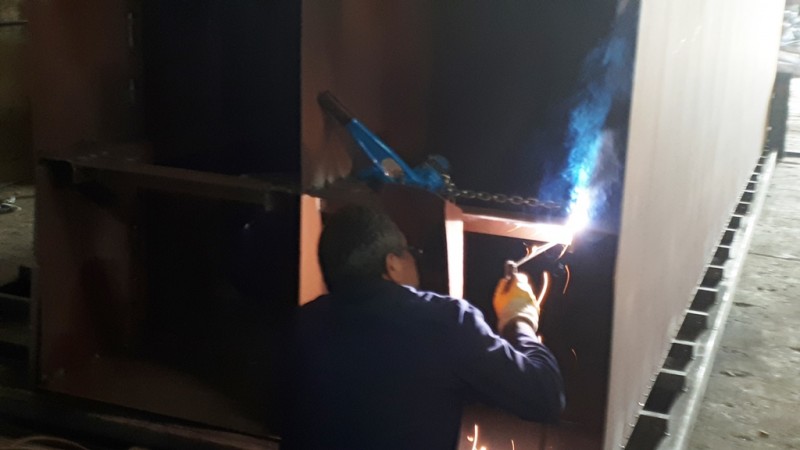
Precision cutting of steel plate components using CNC plasma cutting equipment ensuring dimensional accuracy and repeatability across all modular sections for interchangeable assembly. Forming operations creating tank shell sections with appropriate curvature, maintaining dimensional tolerances for flange connections. Welding of primary tank structures by certified marine welders following approved welding procedures for pressure-containing vessels. All critical welds subject to visual inspection and non-destructive testing including ultrasonic or radiographic examination where required by pressure vessel codes. Installation of internal baffles, stiffeners and structural reinforcement designed to handle water ballasting loads while maintaining dimensional stability during filming operations. Fabrication and precision machining of quick-connect flange systems enabling rapid assembly without specialized toolsβ€”critical for on-set efficiency. Each flange pair machined to tight tolerances ensuring leak-free connection with simple bolt-up procedure. Integration of mounting lugs, rigging points and equipment attachment locations at positions specified by production rigging coordinator. All lifting and mounting points load tested and certified. Installation of access panels and camera ports with sealed, pressure-rated closures. Fabrication and installation of transparent viewing panels using pressure-rated acrylic with precision-machined frames and sealing systems. Viewing panels designed for optical clarity meeting cinematography standards while maintaining structural integrity. Precision machining of valve mounting flanges and connection points for ballast system piping. Installation of pipe stubs, connection points and mounting provisions for hydraulic and electrical components.

Phase 4: Systems Integration & Testing

Installation of flow control valving systems including manual and remote-operated valves for flooding and draining sequences, calibrated flow restrictors providing controlled ballasting rates for consistent camera takes, overflow protection systems with sensors preventing over-pressurization, emergency drain valves with remote operation for rapid tank drainage if needed and isolation valves allowing individual module control. Each valve system tested for smooth operation, leak-free sealing and repeatable performance. Integration of level monitoring systems providing visual indicators for operators, remote monitoring capabilities for production safety personnel and audible alarms for over-level conditions. Sensors calibrated and tested for accuracy across full operating range. Fabrication and installation of interconnecting piping systems including rigid pipe sections for permanent connections, flexible hoses for modular connections between tank sections, quick-disconnect couplings for rapid assembly/disassembly and support brackets preventing hose damage during operation. All piping hydrostatically tested to verify leak-free performance. Installation of hydraulic and electrical control systems compatible with film production infrastructure including control panels with clearly labeled switches and indicators, emergency stop systems accessible to safety personnel, remote operation capabilities for off-camera control and power distribution meeting electrical safety codes. Comprehensive pressure testing program for each tank module conducted in fabrication facility. Testing procedure included: initial leak test at 50% operating pressure, progressive pressure increase to full operating pressure with hold time, final test at 1.5 times maximum operating pressure per pressure vessel code requirements and monitoring for leaks, deformation or structural issues throughout test. Detailed inspection of all welds, flanges, transparent panels and penetrations during pressure testing. Any deficiencies immediately addressed and components re-tested. Functional testing of complete ballast system including simulation of flooding sequences, draining procedures, emergency operations and control system functionality. Multiple test cycles performed to verify repeatable performance required for film production takes. Documentation of all test results with photographic and video records for production safety approval and insurance requirements.

Phase 5: Surface Treatment & Identification

Surface preparation of external and internal tank surfaces through abrasive blasting to specified cleanliness standards ensuring optimal coating adhesion and long-term corrosion protection. Blasting operations performed to SA 2.5 standard with immediate coating application to prevent flash rusting. Application of protective coating system specifically designed for fresh/saltwater immersion and repeated wet/dry cycling during filming operations. Coating system included: zinc-rich epoxy primer for corrosion protection, epoxy intermediate coats building film thickness and polyurethane topcoat providing weather resistance and cleanable surface. Coating thickness measured and documented with minimum thickness requirements verified at all locations. Application of color coding and identification markings as specified by production team for camera angles and scene continuity. Custom color matching to production designer's specifications for on-camera appearance. Installation of safety placards including maximum operating pressure, capacity markings, emergency procedure instructions and hazard warnings meeting entertainment industry safety standards. Application of operational labels providing clear instruction for production crew operating ballast systems. Installation of equipment identification tags and serial numbers for inventory control. Quality control inspection of coating application including adhesion testing, thickness verification and visual examination for defects, holidays or contamination. Touch-up and refinishing of any areas requiring additional protection or visual consistency for filming purposes. Final cleaning and preparation for delivery including removal of fabrication debris, protection of sensitive components and application of temporary protective coverings for transportation.

Phase 6: Delivery & On-Set Support

Disassembly of tank modules for transport with careful documentation of assembly sequence and connection procedures. Application of protective packaging preventing damage during transit to filming location including padding of flange faces, protection of transparent panels, securing of loose components and weather protection. Logistics coordination ensuring delivery synchronized with film production schedule and set construction timeline. Transportation arranged using specialized vehicles capable of handling modular tank sections. Delivery to filming location with advance coordination regarding access routes, unloading areas and equipment positioning. On-site technical support during initial installation providing guidance to production crew on modular assembly procedures, flange connection and bolt-up technique, pipe connection and system integration and hydraulic/electrical hookup. Supervision of initial assembly verifying proper sequence, correct flange alignment, proper bolt torque values and leak-free connections. System checkout including filling operations, valve function verification, level monitoring calibration and emergency systems testing. Demonstration of flooding and draining procedures to set operators and safety personnel including normal operations, emergency procedures and troubleshooting techniques. Training sessions covering daily pre-use inspections, operating procedures, safety protocols and maintenance requirements. Provision of comprehensive documentation including assembly drawings with detailed connection procedures, operating manuals with step-by-step instructions and safety information, maintenance procedures for daily and periodic servicing, emergency procedures for rapid tank drainage and system shutdown and test certificates documenting pressure testing and safety compliance. Standby technical support throughout filming period for troubleshooting, operational adjustments and modifications as scene requirements evolved. Availability for emergency response if equipment issues arose during production. Final decommissioning support at completion of submarine filming sequences including disassembly guidance, component inspection and documentation, recommendations for equipment storage or future reuse and final equipment condition reporting.

Project Gallery

Technical Specifications

🎬

Client

Hollywood Production

Major film production with submarine sequences

πŸ›’οΈ

Equipment Type

Modular Ballast Tanks

Authentic submarine ballast tank systems

βš™οΈ

Configuration

Quick-Connect Design

Rapid assembly without specialized tools

πŸ”§

Testing Standard

1.5x Operating Pressure

Comprehensive pressure and safety testing

πŸ“

Location

Turkey Film Set

On-location installation and support

βœ”

Certification

Safety Approved

Film industry safety standards compliance