Project Overview

When one of the world's largest container vesselsโ€”a massive 24,000 TEU ultra-large container carrierโ€”arrived at Ambarli Port in Istanbul for a routine port call, the ship's crew discovered a critical equipment failure that threatened to disrupt the vessel's tight operational schedule. The ship's 10-tonne Safe Working Load (SWL) provision crane, an essential piece of deck equipment used for loading stores, spare parts and supplies during port calls, had suffered catastrophic damage and complete malfunction. This crane represents a vital lifeline for the vessel's operations, enabling the crew to transfer everything from food provisions and technical spares to mail and personal items between ship and shore without relying on expensive shore-based crane services or causing delays to cargo operations.

The challenge facing the vessel operator was substantial and multi-faceted. Container shipping operates on precisely coordinated schedules where even minor delays can cascade through global supply chains, potentially costing hundreds of thousands of dollars in missed connections, late arrival penalties and disrupted cargo delivery commitments. The vessel could not afford an extended port stay for crane repairs, yet sailing without a functioning provision crane would severely compromise the ship's operational capabilities at subsequent ports, forcing reliance on shore cranes at significant cost and inconvenience. Furthermore, any repair work on critical lifting equipment requires rigorous classification society oversight and certification to ensure compliance with international maritime safety regulationsโ€”adding layers of technical requirements and documentation to an already time-critical situation.

Seaway Ship Services was contacted to provide an emergency response solution that would restore the crane to full operational status before the vessel's scheduled departure. Our challenge was to execute a complete project cycle within the vessel's limited port time: emergency mobilization of personnel and equipment, precision dismantling of the damaged crane from its deck-mounted position, safe transportation of the multi-tonne crane assembly to our workshop facilities, comprehensive disassembly and damage assessment, complete overhaul including structural repairs and mechanical reconditioning, rigorous testing and classification society certification, return transportation to the vessel and reinstallation with full commissioningโ€”all coordinated around the vessel's cargo operations and departure schedule. This project would demonstrate Seaway's unique capability to deliver complex ship repair solutions under extreme time pressure while maintaining the exacting quality and safety standards demanded by classification societies and international maritime regulations.

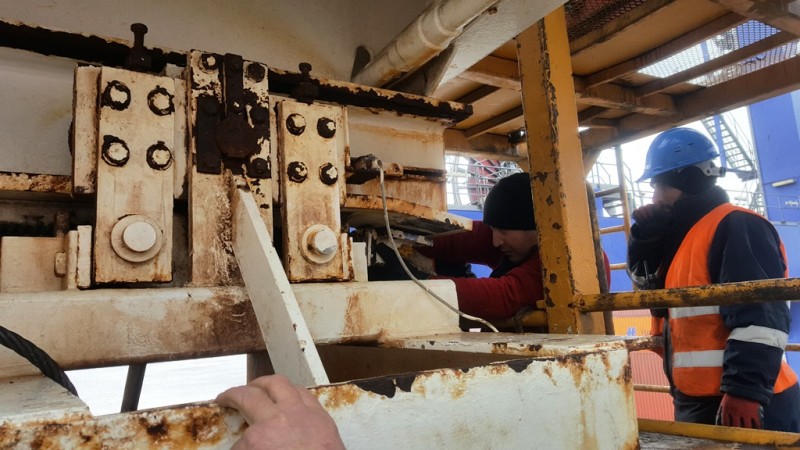
Challenge & Solution

The Challenge

  • 24,000 TEU ultra-large container vessel with tight schedule
  • 10-tonne SWL provision crane complete malfunction
  • Critical equipment for vessel provisioning and stores handling
  • Limited port call time before scheduled departure
  • Coordination required around cargo operations
  • Heavy crane requiring specialized rigging and transport
  • Complete overhaul needed including structural and mechanical repairs
  • Classification society inspection and certification mandatory
  • Zero tolerance for schedule delays impacting global supply chain
  • Emergency mobilization and fast-track project execution required

Our Solution

  • Immediate emergency response and team mobilization
  • Coordinated dismantling plan with cargo operations
  • Heavy-lift operations with specialized rigging equipment
  • Safe transportation to workshop facilities
  • Complete disassembly and comprehensive damage assessment
  • Structural repairs, mechanical overhaul and component replacement
  • Load testing and operational verification
  • Classification society surveyor coordination and approval
  • Precision reinstallation and commissioning
  • On-time completion before vessel's departure schedule

Project Execution Timeline

Phase 1: Emergency Assessment & Dismantling

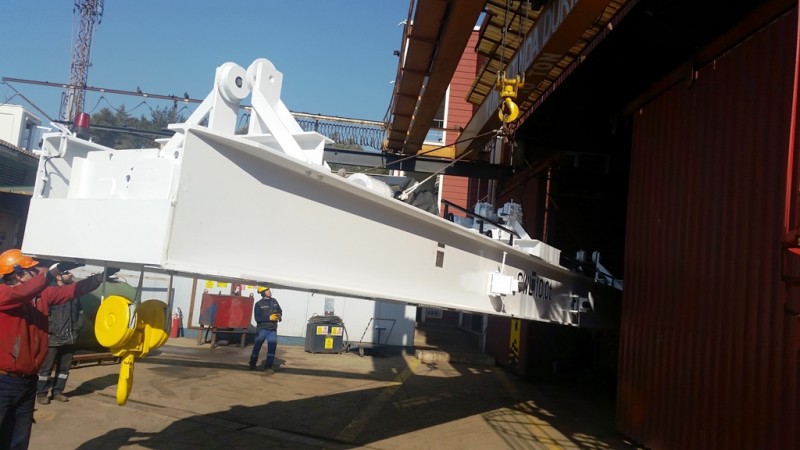
Emergency mobilization following notification of crane malfunction with immediate deployment of Seaway technical team to Ambarli Port. Initial on-site assessment of damaged crane identifying structural damage, mechanical failures and safety concerns preventing operation. Coordination meeting with vessel's chief officer, chief engineer and cargo operations supervisor to review repair scope, timeline constraints and operational coordination requirements. Development of detailed dismantling plan including rigging arrangements, lift sequences, deck preparation and safety procedures. Coordination with port authorities regarding crane vessel positioning and heavy-lift operations permits. Mobilization of heavy-lift equipment including mobile cranes with sufficient capacity for 10+ tonne crane assembly, specialized rigging gear, transport vehicles and workshop tooling. Positioning of shore-based mobile crane at quayside alongside the massive container vessel with careful attention to reach requirements given vessel's substantial freeboard. Installation of dismantling rigging including heavy-duty slings, shackles and spreader beams sized for crane weight and center of gravity considerations. Electrical and mechanical isolation of crane including disconnection of power supply, removal of electrical cables and drainage of hydraulic systems. Systematic removal of mounting bolts securing crane pedestal to deck foundation using impact tools, hydraulic tensioners and cutting equipment where corrosion had seized fasteners. Coordinated heavy-lift operation raising the complete crane assembly from deck-mounted position with careful control of load orientation and swing radius. Transfer of crane assembly over vessel's side with precise control during critical phases including passing ship's rail and cargo container stacks. Landing of crane onto quayside with proper load distribution on timber cribbing. Preparation for road transport including installation of transport fixtures, securing arrangements and protective packaging. Loading onto specialized heavy transport trailer with proper weight distribution and tie-down arrangements. Transport convoy from Ambarli Port to Seaway workshop facilities following approved route with pilot vehicle escort. Arrival at workshop and careful offloading using facility cranes onto dedicated work stands.

Phase 2: Complete Disassembly & Damage Assessment

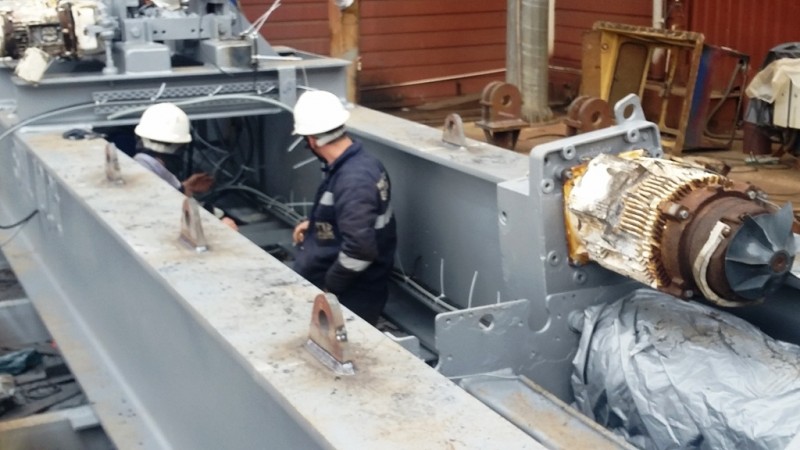
Systematic disassembly of crane structure in controlled workshop environment beginning with removal of slewing ring assembly, boom structure, hydraulic cylinders and wire rope systems. Detailed documentation of disassembly sequence with photographic records and component labeling for accurate reassembly. Comprehensive inspection of all structural elements including boom sections, pedestal structure, slewing ring mounting flanges and foundation interface. Discovery of critical structural damage including fractured welds in boom structure resulting from overload event or material fatigue. Identification of slewing bearing wear with excessive play indicating need for complete replacement or reconditioning. Assessment of hydraulic system components revealing cylinder seal failures, valve contamination and pump wear. Inspection of wire rope hoisting system showing rope damage, sheave groove wear and drum surface deterioration. Examination of electrical system including motor condition, controller functionality and wiring integrity. Preparation of detailed damage report documenting all findings with measurements, photographs and engineering assessment of each defect. Engineering review to determine repair versus replace decisions for each damaged component based on technical feasibility, cost considerations and availability of replacement parts. Development of comprehensive repair specification including welding procedures, machining requirements, component specifications and quality control criteria. Ordering of long-lead replacement components including slewing bearing elements, hydraulic seals, electrical components and wire rope with expedited delivery to support project schedule. Preparation of material and equipment requirements for repair operations including welding consumables, machining tools, hydraulic test equipment and electrical testing instruments.

Phase 3: Structural Repairs & Mechanical Overhaul

Execution of structural weld repairs on boom assembly by coded welders using approved welding procedures following classification society requirements. Precision preparation of cracked weld areas including complete removal of damaged material, proper joint preparation and pre-weld cleaning. Multi-pass welding technique employed for heavy section repairs ensuring full penetration, proper fusion and adequate reinforcement. Post-weld heat treatment where required by specifications to relieve residual stresses and restore material properties. Non-destructive testing of all critical welds including visual inspection, magnetic particle testing and ultrasonic inspection to verify weld quality and absence of defects. Machining operations to restore worn surfaces including slewing ring mounting faces, bearing journals and pin connections using precision machine tools. Reconditioning of slewing ring assembly including replacement of damaged rolling elements, raceway repairs and lubrication system overhaul. Complete hydraulic system rebuild including cylinder disassembly, replacement of all seals and wear components, surface reconditioning of cylinder bores and piston rods and reassembly with proper clearances. Overhaul of hydraulic power unit including pump replacement or rebuild, valve cleaning and testing, manifold inspection and system flushing. Replacement of hydraulic hoses showing signs of deterioration with new hoses meeting specification requirements. Electrical motor inspection and testing with rewinding or replacement where insulation damage or bearing failures identified. Controller refurbishment including replacement of contactors, relays and damaged wiring components. Wire rope system renewal including complete replacement of hoisting rope, sheave inspection and reconditioning, drum surface preparation and proper rope installation with correct terminations. Installation of new or rebuilt components into crane structure with proper fit verification, torque specifications and alignment checks. Application of protective coatings including surface preparation by abrasive blasting, primer application to bare steel and marine-grade topcoat systems for long-term corrosion protection. Final assembly of complete crane ensuring all mechanical interfaces properly mated, electrical connections secure, hydraulic lines properly routed and all fasteners properly torqued.

Phase 4: Testing, Certification & Reinstallation

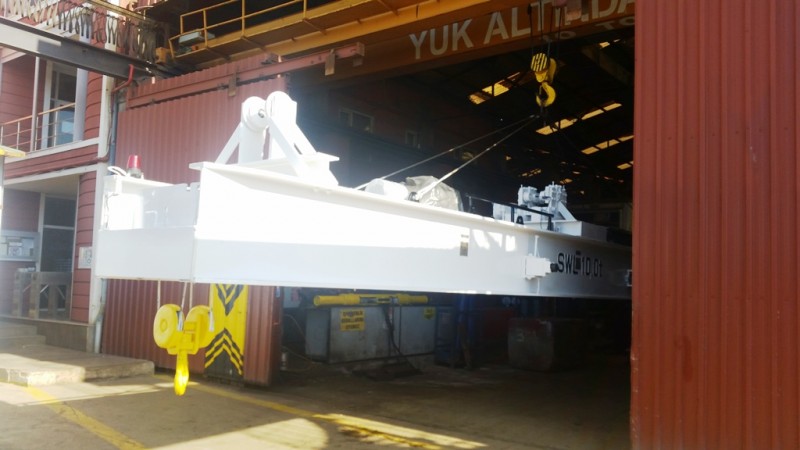
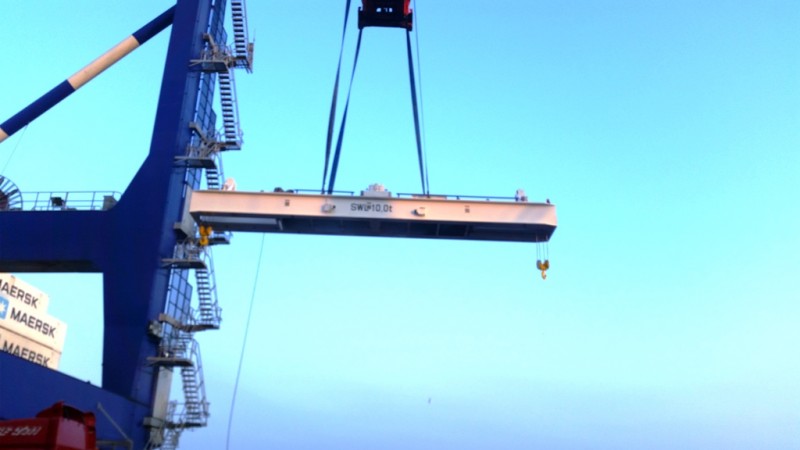
Workshop functional testing of rebuilt crane assembly including electrical motor operation under no-load conditions verifying proper rotation direction, electrical current draw and control system functionality. Hydraulic system pressure testing to specified working pressure confirming seal integrity, absence of leaks and proper operation of all valves and cylinders. Static load testing with calibrated test weights progressively increasing to Safe Working Load of 10 tonnes to verify structural integrity and load-holding capability. Dynamic operational testing including boom raising and lowering cycles, slewing rotation through full range and hoisting operations at various boom angles and extensions. Verification of all safety systems including overload protection, limit switches, emergency stop functions and warning devices. Dimensional verification confirming boom geometry, slewing ring alignment and foundation interface dimensions match vessel requirements. Final inspection by classification society surveyor reviewing all repair documentation, test results and completed crane assembly. Resolution of any surveyor observations or additional requirements. Issuance of class approval certificate authorizing return to service. Preparation for return to vessel including protective packaging for transport, securing arrangements and crane positioning for efficient installation. Coordination with vessel agent regarding timing of delivery to coincide with vessel's availability and minimize impact on cargo operations. Transport back to Ambarli Port with careful handling to prevent damage to newly reconditioned crane. Positioning of mobile crane alongside vessel ready for lifting operations. Precision lift of crane assembly from transport vehicle controlling load orientation and swing path. Careful raising of crane to installation height with continuous communication between deck crew and crane operator. Precise positioning of crane pedestal over deck foundation mounting bolts with alignment verification. Final lowering onto foundation with proper seating and load transfer. Installation of foundation bolts with proper torque application using calibrated tools. Reconnection of hydraulic supply lines from ship's hydraulic system to crane power unit with pressure testing of connections. Electrical connection of crane control system to ship's electrical distribution with proper isolation and protection devices. Verification of electrical continuity and insulation resistance measurements. Final commissioning tests including boom raising and lowering, slewing rotation and load hoisting operations under supervision of chief officer. Demonstration of all crane functions meeting performance requirements and classification requirements. Final inspection by classification surveyor confirming proper installation and operational readiness. Handover to chief officer with complete documentation package including repair records, material certificates, test reports and operating instructions. Training session with crane operators covering proper use, safety procedures and routine maintenance requirements.

Project Gallery

Technical Specifications

๐Ÿšข

Vessel Type

24,000 TEU

Ultra-large container vessel

๐Ÿ—๏ธ

Equipment

10 Tonne SWL

Ship's provision crane

๐Ÿ“

Location

Ambarli, Istanbul

Emergency port call repair

๐Ÿ”ง

Scope

Complete Rebuild

Structural and mechanical overhaul

โš™๏ธ

Systems

Full Integration

Hydraulic, electrical, mechanical

โœ“

Certification

Class Approved

Full classification society certification